AB7, its innovation arm based in Dhahran, Aramco has teamed up with the World Economic Forum to run a global startup challenge focused on semiconductors and industrial AI, two areas sitting right at the center of the biggest technology race of our time.
Saudi Aramco has never been shy about wanting to be more than an oil company. But its latest move makes that ambition unusually concrete. Through LAB7, its innovation arm based in Dhahran, Aramco has teamed up with the World Economic Forum to run a global startup challenge focused on semiconductors and industrial AI, two areas sitting right at the center of the biggest technology race of our time.
The challenge is hosted on UpLink, a platform the WEF uses to connect startups with companies that have the resources to help them grow. For Aramco, the motivation is not hard to read. At Davos earlier this year, its CEO Amin Nasser shared that AI integration across the company's operations had generated roughly six billion dollars in value over 2023 and 2024. When a company is seeing returns like that from AI, it starts caring deeply about the hardware making it all possible.
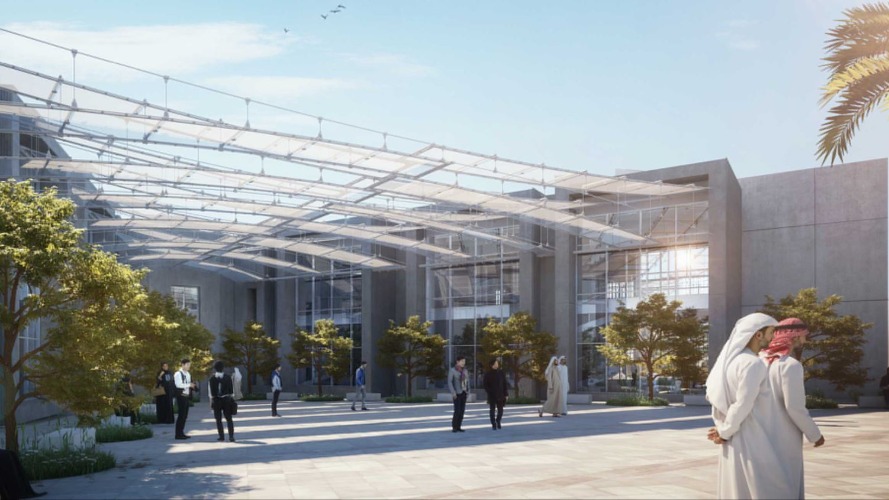
LAB7 itself is named after Dammam Well Number 7, the first commercial oil well ever drilled in Saudi Arabia back in 1938. The name is deliberate. It connects a century of industrial heritage to what Aramco hopes will be its next chapter. The facility sits in Dhahran, right next to the King Abdulaziz Center for World Culture, and is built around a simple but rarely delivered promise to startups: we will not just fund you, we will build with you. There are prototyping workshops, over 115 advanced fabrication machines, private garage spaces for resident startups, and a team of engineers and business people who work directly alongside founders rather than just writing checks and waiting for quarterly updates.
What makes this particularly interesting for early stage founders is how LAB7 fits into Aramco's wider support structure. Getting picked by LAB7 is essentially the first rung of a four stage ladder. After LAB7 comes Wa'ed Ventures, which provides seed funding to startups ready to scale. Then there is Taleed, which helps growing companies expand and create jobs. And at the top sits the Namaat program, reserved for companies with the potential to become what Aramco calls National Champions, businesses capable of reshaping their industries on a global scale. In other words, a startup that enters through this WEF challenge is not just getting a one time boost. It is entering a long term ecosystem with real money and real infrastructure behind it.
The bet on chips and AI is timed well. General purpose processors were not designed for the kind of workloads modern industrial AI demands, and that gap has created real opportunity for startups working on more specialized solutions. Aramco sees this as both a sourcing exercise, finding companies it might want to back early, and a genuine contribution to building a technology ecosystem in the Kingdom, which is a core piece of Saudi Arabia's Vision 2030 plan to move the economy beyond oil.
LAB7 has been active for a while now. Late last year it backed Homeostasis, an American startup turning industrial carbon emissions into synthetic graphite for use in batteries. That investment tells you something about how LAB7 thinks: the best bets sit at the intersection of Aramco's existing scale and the problems the world is trying to solve next. The semiconductor challenge takes that same logic further.
So who exactly should apply? LAB7 focuses on early stage startups that have already done some initial validation of their product and completed basic testing. You do not need to be a Saudi company or even based in the region. Physical presence at the facility is not mandatory, and LAB7 works with founders locally and globally. The focus areas for this particular challenge are AI, machine learning, data analytics, and semiconductor technologies built for industrial applications.
The application process itself is straightforward. Startups submit through the WEF UpLink platform at the link listed on the challenge page. From there, applications are screened and shortlisted founders may be invited for pitch sessions or further conversations. If your startup moves forward, it goes into a more detailed evaluation and due diligence process before the final decision is made by LAB7's Venture Building Committee.
If selected, what you actually get goes well beyond a funding announcement. LAB7 takes a minority equity stake in exchange for both capital and in-kind support, meaning you get money but also access to the facility, the machines, the technical team, and the Aramco network. For a hardware or deep technology startup, that kind of infrastructure is genuinely hard to find anywhere else at this stage. Add to that the potential pathway into Wa'ed Ventures, Taleed, and Namaat further down the line, and the upside is significant.
For any founder working on the future of compute, the pitch from Dhahran is simple. The oil era is funding the chip era, and LAB7 is where Aramco wants the two to meet. If you think your startup belongs in that conversation, the WEF UpLink platform is where to start.