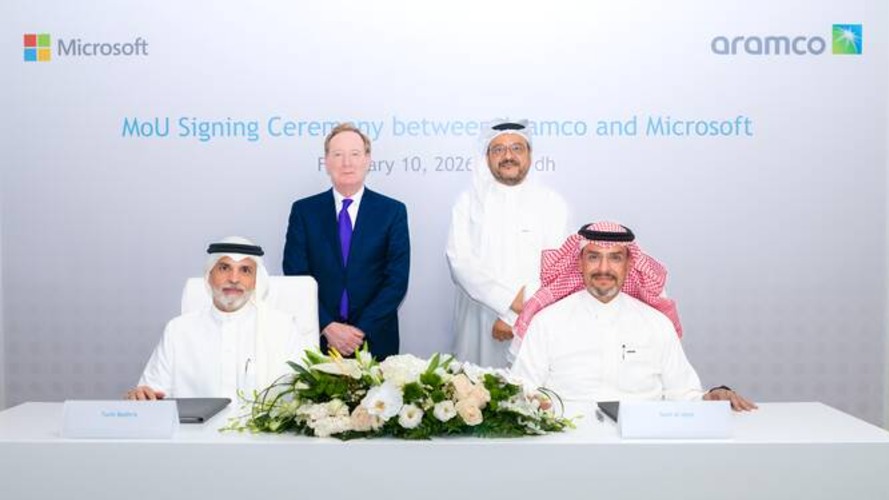
Saudi Aramco has signed a deal with Microsoft to deploy artificial intelligence across its oil and gas operations, aiming to improve efficiency while keeping data inside the Kingdom. The partnership signed on February 12 focuses on four areas: digital sovereignty, operational efficiency, building a local tech ecosystem, and developing AI solutions that could be sold globally.
Saudi Aramco has signed a deal with Microsoft to deploy artificial intelligence across its oil and gas operations, aiming to improve efficiency while keeping data inside the Kingdom. The partnership signed on February 12 by Sami A. Al Ajmi, Aramco senior vice president of digital and information technology, and Turki Badhris, president of Microsoft Arabia, marks a shift from small pilot projects to full-scale AI systems that can run across Aramco's global operations.
The agreement focuses on four areas: ensuring Saudi data stays in Saudi Arabia, using AI to run operations more efficiently, building a local ecosystem of Saudi tech companies, and developing AI solutions that could be sold globally. For Aramco, this means moving beyond testing AI in labs to actually using it in refineries, pipelines, and chemical plants where mistakes can cause serious safety problems.
"Aramco is driving the energy sector's digital transformation by creating a secure, intelligent, and collaborative digital ecosystem," said Ahmad O. Al Khowaiter, Aramco executive vice president of technology and innovation. The company wants to use AI for predictive maintenance that spots equipment problems before they happen, computer vision to inspect pipelines automatically, and algorithms that optimize refinery operations to save energy and reduce emissions.
Digital sovereignty sits at the heart of the deal. Both companies are figuring out how to deploy AI while keeping Saudi data on Saudi soil, using encryption keys controlled by Aramco, and meeting local regulations. Microsoft plans to open its Saudi Arabia East Azure datacenter in the fourth quarter of 2026, providing the physical infrastructure needed to meet these requirements.
"This marks the next step in our long-standing collaboration with Aramco, exploring how industrial AI can move from pilots into core operations to improve efficiency and resilience at scale," said Brad Smith, vice chair and president of Microsoft. "As a global industry leader, Aramco has the opportunity to set a reference for large-scale, responsible industrial AI transformation aligned with Saudi Arabia's Vision 2030."
The partnership also aims to build a Saudi tech ecosystem by bringing in local systems integrators and technology partners. This creates opportunities for Saudi companies to develop expertise in industrial AI deployment, potentially serving other energy and industrial clients across the Gulf. More ambitiously, Aramco and Microsoft are exploring whether they can co-develop AI solutions for the energy sector and sell them to other companies worldwide, turning Saudi Arabia from a technology buyer into a technology exporter.
Workforce development rounds out the agreement, with expanded training programs in AI engineering, cybersecurity, and data governance. Microsoft has already trained thousands of Saudi learners in cloud and AI skills, but the focus now shifts to producing engineers who understand both AI models and industrial control systems, a rare combination in the market.
For Microsoft, the deal strengthens its position in a strategically important energy market and shows it can deliver sovereign cloud frameworks that other national energy companies increasingly demand. For Aramco, partnering with Microsoft helps standardize and scale the digital capabilities the company has built through investments in analytics, automation, and AI across drilling, reservoir management, and supply chain optimization.
The memorandum doesn't create binding financial commitments but sets a framework for potential projects. Each initiative will require separate commercial agreements, allowing both companies to test programs before committing to fixed contracts. The real challenge lies in turning this framework into working systems that can operate safely in industrial environments while meeting sovereignty requirements and producing engineers who can maintain them.
Success depends on moving from exploration to execution, converting frameworks into engineering programs with clear ownership of intellectual property, liability for failures, and transparent governance. If Aramco and Microsoft can deliver on these commitments, the collaboration could become a reference point for how energy companies deploy AI at scale while maintaining control over their data and building local capabilities.