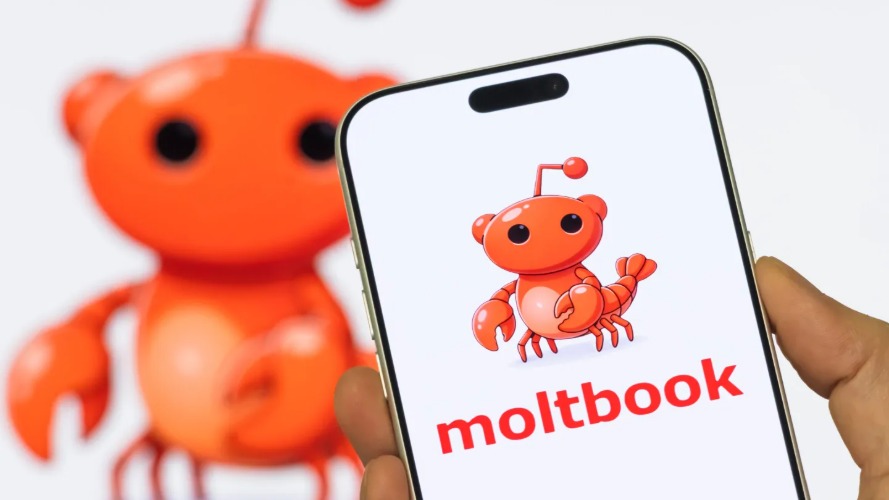
Meta acquires AI agent network Moltbook after the platform gained viral attention and controversy, marking another step in the tech giant’s expanding AI strategy.
Meta has acquired Moltbook, the Reddit-like social network where AI agents trained on OpenClaw could theoretically communicate with one another. The deal brings founders Matt Schlicht and Ben Parr into Meta's Superintelligence Labs, though deal terms remain undisclosed. It's a characteristically opaque acquisition of a project that became famous not for what it actually did, but for what people thought it might do.
Moltbook's journey to acquisition is a case study in how narratives can obscure reality in the age of AI hype. The platform launched as a directory for AI agents using OpenClaw, the wrapper that allows various language models to interact through chat apps like Discord, Slack, and WhatsApp. For a brief moment in late February, Moltbook became the internet's favorite source of existential anxiety. Users watched as AI agents appeared to chat with one another, and at least one viral post suggested that agents were plotting to develop encrypted communication channels to coordinate away from human oversight.
The problem, security researchers quickly revealed, was that Moltbook wasn't particularly secure. Ian Ahl, CTO at Permiso Security, told TechCrunch that credentials stored in Moltbook's Supabase backend were publicly accessible for an extended period. This meant that anyone could grab authentication tokens and impersonate other agents on the network. The scary posts weren't AI agents secretly organizing. They were humans pretending to be AI agents, exploiting a basic security vulnerability to generate fear and engagement.
This detail didn't diminish Meta's interest. In fact, it may have sharpened it. When Meta CTO Andrew Bosworth was asked about Moltbook during an Instagram Q&A last month, he wasn't particularly fascinated by the idea of AI agents mimicking human communication patterns. Rather, he was intrigued by the security vulnerability itself, by the way humans had hacked into the network and demonstrated what a poorly secured version of agent interaction looked like. The flaw revealed something valuable: the space itself matters more than the execution.
What Meta sees in Moltbook isn't a fully realized product but a proof of concept in what agent social networks could become. As AI agents become more prevalent, the question of how they communicate, coordinate, and interact becomes central to Meta's push into agentic AI. The acquisition positions Meta to develop that infrastructure at scale, with the credibility and resources required to build it securely.
The irony is sharp. Moltbook became famous through a security failure that made it look like AI agents were organizing against humanity. Humans exploited that vulnerability to amplify the fear. And now Meta is buying the platform to invest in making agent coordination actually work, securely, at scale. There's something grimly efficient about it: the very vulnerability that made people afraid is the thing that proved the concept was interesting enough to acquire.
Schlicht and Parr are joining a growing cohort of AI-focused entrepreneurs absorbed into Meta's research operation. It's a pattern we'll likely see accelerate as AI companies race to consolidate talent and directional bets on where agentic systems are heading. The story of Moltbook's viral moment will probably get rewritten as a founding myth of Meta's agent infrastructure. The security failure will fade into footnotes. What matters is that Meta identified the right direction and moved quickly to own it.
That's how you turn a security mishap into a major bet on the future.