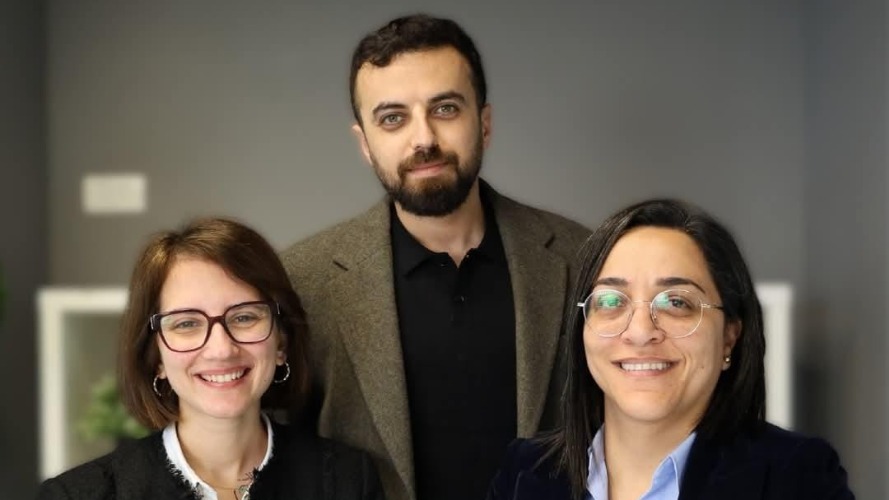
RiFD and Kingsbury have partnered to scale securitisation in Saudi Arabia combining local asset infrastructure with global deal structuring expertise. The partnership targets a capital markets gap that has long limited institutional access to Saudi assets.
Saudi Arabia's capital markets have been opening up steadily over the past several years, but one segment has remained stubbornly underdeveloped relative to the size and ambition of the broader economy: securitisation. The gap between the volume of financeable assets sitting across the Kingdom's housing, infrastructure, SME, and energy sectors and the structured finance tools available to package and distribute them to institutional investors has long been a friction point. A new partnership between RiFD and Kingsbury and Partners is a direct attempt to close that gap.
RiFD, founded in 2024 by Abdulrahman AlDakheel, is the first Saudi-born platform built specifically to enable the securitisation of financial assets. The company operates what it describes as a securitisation-as-a-service model, giving banks, corporates, and investors digital tools to structure and manage securitised assets across sectors including housing, infrastructure, renewable energy, and SMEs. Its technology layer handles the aggregation, analysis, and management of those assets, covering real-time data analytics, risk classification, transparent asset pooling, and customised portfolio construction. The platform is also fully Shariah-compliant, which is not a minor detail in a market where Islamic finance compatibility determines whether an institutional product is accessible to the majority of domestic capital.
Kingsbury and Partners is a British-owned private and structured credit specialist that brings what RiFD's technology platform does not have by itself: transaction structuring expertise, investor alignment capabilities, and established relationships within global credit frameworks. Under the partnership, RiFD will function as the infrastructure layer while Kingsbury handles the execution side, working with investors and guiding deal structures through international frameworks that global capital recognises and trusts. The combination is designed to address the specific challenge of connecting Saudi-originated assets to institutional investors who want exposure to the Kingdom's growth but need familiar legal and structural architecture to get comfortable doing so.
The timing reflects genuine momentum in Saudi Arabia's capital markets development. SME credit in the Kingdom surpassed SAR 351.7 billion in Q4 2024, growing over 27.6% year-on-year, yet receivables-based financing still accounts for less than 6% of that total. That gap is both a market failure and an opportunity, and RiFD has built its entire thesis around being the infrastructure that closes it. The broader capital markets context is equally supportive. Sukuk issuance has been expanding, private credit is attracting increasing institutional attention, and the Capital Market Authority has been actively working to deepen liquidity and diversify financing instruments available in the Kingdom.
For international investors, Saudi Arabia's growth story has become increasingly compelling, but access through instruments that meet global institutional standards has not always been straightforward. That is precisely where the RiFD and Kingsbury partnership is positioned. By combining local origination infrastructure with globally recognised structuring expertise, the partnership creates a pathway for international capital to enter Saudi asset classes that were previously difficult to access at institutional scale. Kingsbury's involvement signals that sophisticated global credit players are paying serious attention to what is being built in the Kingdom's structured finance market, not as a speculative bet but as a structured, returns-driven proposition.
For the wider MENA fintech and capital markets ecosystem, the deal is a useful marker of where the region's financial infrastructure is heading. Vision 2030 has set an explicit target of deepening Saudi capital markets as part of its economic diversification agenda, and the emergence of technology-enabled structured finance platforms is a meaningful step toward that goal. As the number of asset classes available for securitisation expands and the investor base willing to participate grows, platforms like RiFD are positioned to become essential infrastructure rather than niche tools.