Saudi Arabia's Capital Market Authority has shifted focus from dual listings to domestic ones. Chairman Mohammed El-Kuwaiz confirmed national companies will be prioritized to keep financing capital inside the Kingdom.
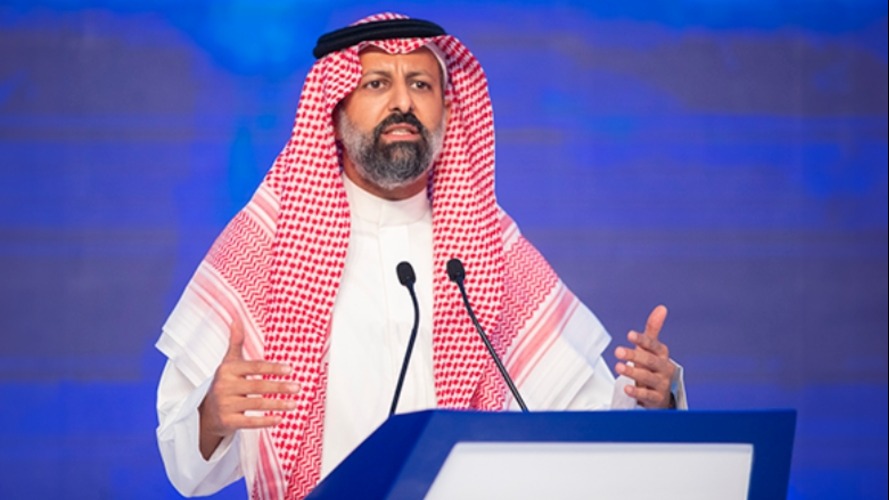
Saudi Arabia's capital market regulator has sent a clear and deliberate message to companies considering where to go public. The Capital Market Authority has formally shifted its focus from dual listings toward domestic ones, with Chairman Mohammed El-Kuwaiz stating that priority will be given to national companies seeking to list on the Saudi Exchange. The announcement came during Funding Week, an event organized by the Small and Medium Enterprises General Authority in Riyadh, and it signals a meaningful recalibration in how the Kingdom wants its capital markets to function and who primarily benefits from them.
El-Kuwaiz was direct about the reasoning. Listing national companies on the Saudi Exchange keeps financing capital inside the country, circulating through the domestic economy and strengthening local market depth. When foreign companies list on the Saudi market, the financing raised through that listing flows back out of the Kingdom, which runs counter to the broader goal of building a self-reinforcing domestic capital ecosystem. That is not a closed-door policy toward foreign listings but a clear statement of where regulatory energy and institutional support will be concentrated.
Foreign companies are not being excluded. The CMA has confirmed that international businesses can still list on the Saudi Exchange, but they must meet specific conditions to do so. The most significant of these is either relocating their headquarters to the Kingdom or ensuring that capital raised through the listing remains within Saudi Arabia rather than being repatriated abroad. These are not trivial conditions, and they are designed precisely to ensure that a foreign company's presence on the Exchange generates real economic value for Saudi Arabia rather than simply accessing its investor base as a fundraising mechanism.
The backdrop to this policy shift is a Saudi capital market that has been evolving rapidly in both depth and accessibility. Since the CMA eliminated the Qualified Foreign Investor framework in February 2026, opening the market to all categories of foreign investors without restriction, the Exchange has seen meaningfully higher international participation. Foreign holdings had already exceeded SAR 590 billion by the end of the third quarter of 2025 even under the old framework. The removal of access restrictions was designed to deepen liquidity and widen the investor base, and it appears to have succeeded in generating both. The parallel move to prioritize national company listings is the supply-side complement to that demand-side opening: more domestic companies listing, more international investors able to access them, and more capital staying within the Kingdom's economy.
The SME dimension of this policy is particularly important. El-Kuwaiz noted that 30% of currently listed companies in the Saudi capital market are small and medium-sized enterprises, and that the Nomu parallel market, which was specifically designed to lower the listing barrier for smaller companies, has grown its market capitalization 26 times since inception to nearly SAR 60 billion. Fourteen companies have successfully graduated from Nomu to the main market after scaling their operations, demonstrating that the parallel market is functioning as intended, providing an accessible entry point that builds toward a main board listing rather than remaining a permanent alternative. Listing on the market, as the CMA chairman noted, is fundamentally a financing tool, and making that tool available to national companies at every stage of their growth is central to how Saudi Arabia is building private sector depth under Vision 2030.
For founders and investors across the MENA region, the CMA's positioning is a useful signal. Saudi Arabia is actively building the conditions for its domestic startup ecosystem to access public markets at scale, with Ninja, Tabby, and other unicorns currently evaluating Tadawul listings. The regulatory environment is being shaped to support that pipeline, and the message to national companies is unambiguous: the Saudi Exchange wants you, and it is organizing itself to make listing there the natural and supported choice.